At Mobile World Congress, a lot can happen -- it's the world's biggest mobile industry trade show. From phones to laptops to smart watches and everything in between, here's everything that's been announced in Barcelona so far.
LG G6

LG just announced the G6 smartphone which is the most important launch of this year's MWC. The phone comes with a 5.7-inch touchscreen display with a resolution of 1440 by 2880 pixels at a PPI of 564 pixels per inch. It comes with Qualcomm Snapdragon 821 processor & 4GB RAM. The phone packs 32GB of internal storage that can be expanded up to 2TB a microSD card. the LG G6 packs a 13-megapixel primary camera on the rear and a 5-megapixel front. The LG G6 runs Android 7.0 and is powered by a 3300mAh non removable battery with Quick Charge 3.0 support. The LG G6 is the first smartphone to come with Dolby Vision supports HDR 10, IP68 water-resistant, Fingerprint sensor, enhanced multitasking and Google Assistant with Colors Mystic White, Astro Black, and Ice Platinum. The expected price is $750 (roughly Rs 50,000).
Nokia 3310 reboot

Nokia 3310, the iconic Nokia feature phone, has finally made a comeback at MWC.the display has a 2.4-inch QVGA color display, something that the original didn’t offer. Software upgraded to Nokia Series 30+ , added a 2MP camera with LED flash, and even 16MB storage with support for microSD slot (up to 32GB).this offers a completely revamped version of the classic “Snake”. this phone has 1200mAh battery with talk time up to 22 hours while standby last a month & it also features the classic Nokia ringtone. the new design comes with fresh colors Warm Red and Yellow colours both with a gloss finish & Dark Blue and Grey colours both with a matte finish.The Nokia 3310 is certainly affordable with $52 or 49 Euros(roughly Rs. 3,500)
Samsung Galaxy Tab S3

The Galaxy Tab S3 is an Android 6.0 Marshmallow premium device powered by a quad-core Qualcomm Snapdragon 820 processor. The display is a QXGA Super AMOLED screen that measures 9.7 inches. Other highlights from the specs include a 13MP rear camera, a 5-MP front-facing camera, 4GB of RAM, 32GB of internal storage, microSD support up to 256GB , integrated 4G LTE connectivity, and a large 6,000mAh battery with fast charging support and a USB Type-C connector. The Tab S3 also includes a next-generation S Pen. It Price ranges from 399$-499$.
BlackBerry KeyOne

The phone comes with a 4.5-inch touchscreen display with a resolution of 1620 by 1080 pixels at a PPI of 433 pixels per inch. IT is powered by 2GHz octa-core Qualcomm Snapdragon 625 processor and it comes with 3GB of RAM. The phone packs 32GB of internal storage that can be expanded up to 2TB microSD card. the phone packs a 12MP primary camera on the rear and a 8MP front. this runs Android 7.1 and is powered by a 3,505mAh non removable battery featuring Unique physical keyboard, fingerprint sensor, USB type-C, quick charge. The KEYone Ships in April for $549 Less than Rs 40,000.
Lenovo Moto G5 and G5 Plus

The Moto G5, features a 5-inch full-HD (1080x1920 pixels) display and be powered by a 1.4GHz Snapdragon 430 processor. It offers 2GB RAM and 16GB internal storage, with the option to expand microSD card slot (up to 128GB). The Moto G5 packs a 2800mAh removable battery with support for fast charging. As for optics, the Moto G5 sports a 13-megapixel rear camera with PDAF, f/2.0 aperture, and dual-LED flash, and a 5-megapixel wide-angle front camera for selfies.
Moto G5 Plus, the smartphone features a 5.2-inch full-HD (1080x1920 pixels) display. It is powered by the 2GHz Snapdragon 625 octa-core processor, and offers 3GB RAM & 32GB inbuilt storage, with the option to expand further via a microSD card slot (up to 128GB). the Moto G5 Plus sports 'the most advanced' 12-megapixel rear camera with dual autofocus, 4K video recording, f/1.7 aperture, and dual-LED flash. The Moto G5 Plus packs a 3,000mAh non-removable battery with TurboPower charging.
Also, the duo runs on Android 7.0 Nougat. The phones ships in March in Lunar Grey, and Fine Gold colour variants , pricing at 210$ (which is Rs 14,000 approximately) for the Moto G5 and $229 (which is Rs 15,250 approximately) for the Moto G5 Plus.
Samsung Galaxy Book 10, 12

The mid-range Galaxy Book 10 features a 7th-generation Intel Core m3 processor and a 10.6-inch LCD display with 1080p resolution. Other spec highlights include integrated 4G LTE , a 5MP front-facing camera, 4GB of RAM, either 64GB or 128GB of internal storage, microSD support and up to 10 hours of usage per charge.
The higher-end Galaxy Book 12 features a 7th-generation Intel Core i5 processor clocked at 3.1GHz, an absolutely gorgeous 12-inch FHD+ AMOLED display with a pixel density of 216 ppi, a 13-MP rear & 5MP front-facing camera, either 4GB of RAM with a 128GB SD or 8GB of RAM with a 256GB SD, up to 10.5 hours of usage per charge, and a beautiful case that is just 7.4mm thick.
Both Galaxy Book models run Windows 10 supporting the S Pen Stylus & have two USB Type-C ports, up to 10 hours of battery life, and fast charging.
Nokia 3, 5 and 6

The Nokia 3 is a low-end entry-level Android smartphone. It features a 5-inch IPS LCD display offering HD resolution. It is further enhanced with 2.5D curved Corning Gorilla Glass for added protection. the Nokia 3 is powered by 1.3Ghz quad-core MediTek MTK 6737 processor coupled with 2GB of RAM and 16GB of internal storage which is further expandable up to 128GB microSD card. it features 8-megapixel rear camera with autofocus and LED flash & 8-megapixel front shooter with autofocus and display flash for selfies and video calling. It is fuelled by a 2,650mAh battery. it runs Android 7.0 Nougat. Connectivity options include fingerprint sensor, micro USB (USB 2.0). It is available in four color options of Silver White, Matte Black, Tempered Blue and Copper White.
The Nokia 5 features a 13-megapixel rear camera with PDAF and dual tone flash. Up front, there’s an 8-megapixel camera with 84-degree field-of-view for selfies and video calling. It is fuelled by a 3,000mAh battery. The smartphone is available in tempered blue, copper, black and silver color variants. It features a 3D shaped aluminum body with a radical antenna design. IT boasts a 5.2-inch IPS HD display with Corning Gorilla Glass on top for protection. it comes with Qualcomm’s Snapdragon 430 processor is coupled with 2GB of RAM and Adreno 505 GPU. It further includes 16GB of internal storage which is expandable up to 128GB microSD card running Android 7.0 Nougat.
Nokia 3 and Nokia 5 are priced at 139 Euros (approximately Rs 9,800) and 180 Euros (Rs 12,660 approximately) respectively.
The special edition Nokia 6 also debuted with a 5.5-inch full HD display and is powered by a Qualcomm Snapdragon 430 processor paired with 4GB of RAM that boasts 64GB internal storage with 3000mAh battery and runs Android 7.0 Nougat. it comes with a 16-megapixel rear camera along with an 8-megapixel camera. It is available in a new piano finish in Arte Black color. It is priced at 299 Euros, which is Rs 21,000 approximately.
Huawei P10 and P10 Plus

The P10 feature a 5.1-inch 1080p display and is powered by Kirin 960 processor. The phone comes with 4GB of RAM, 64GB of internal storage, microSD support up to 256GB, and a large 3,200mAh battery. the P10 has a Leica-branded dual-lens rear camera setup featuring 20-megapixel monochrome sensor with a 12-megapixel main sensor & 8MP front
The P10 Plus offers a 5.5-inch WQHD 1440p display & is powered by Kirin 960 processor, 6GB of RAM, 128GB of internal storage, and the rear cameras have a wider f/1.8 aperture compared to the f/2.2 aperture on the P10. The P10 Plus gets a bigger 3,750mAh battery.
Both smartphones runs Android 7.0 featuring NFC & USB type-C support & will be available in green and blue in addition to six more colours: dazzling gold, graphite black, rose gold, white ceramic, mystic silver and prestige gold. Huawei P10 and P10 Plus will be released in March pricing $685(approx Rs 45,676) and $738( approx Rs 49,195) respectively.
Huawei Watch 2
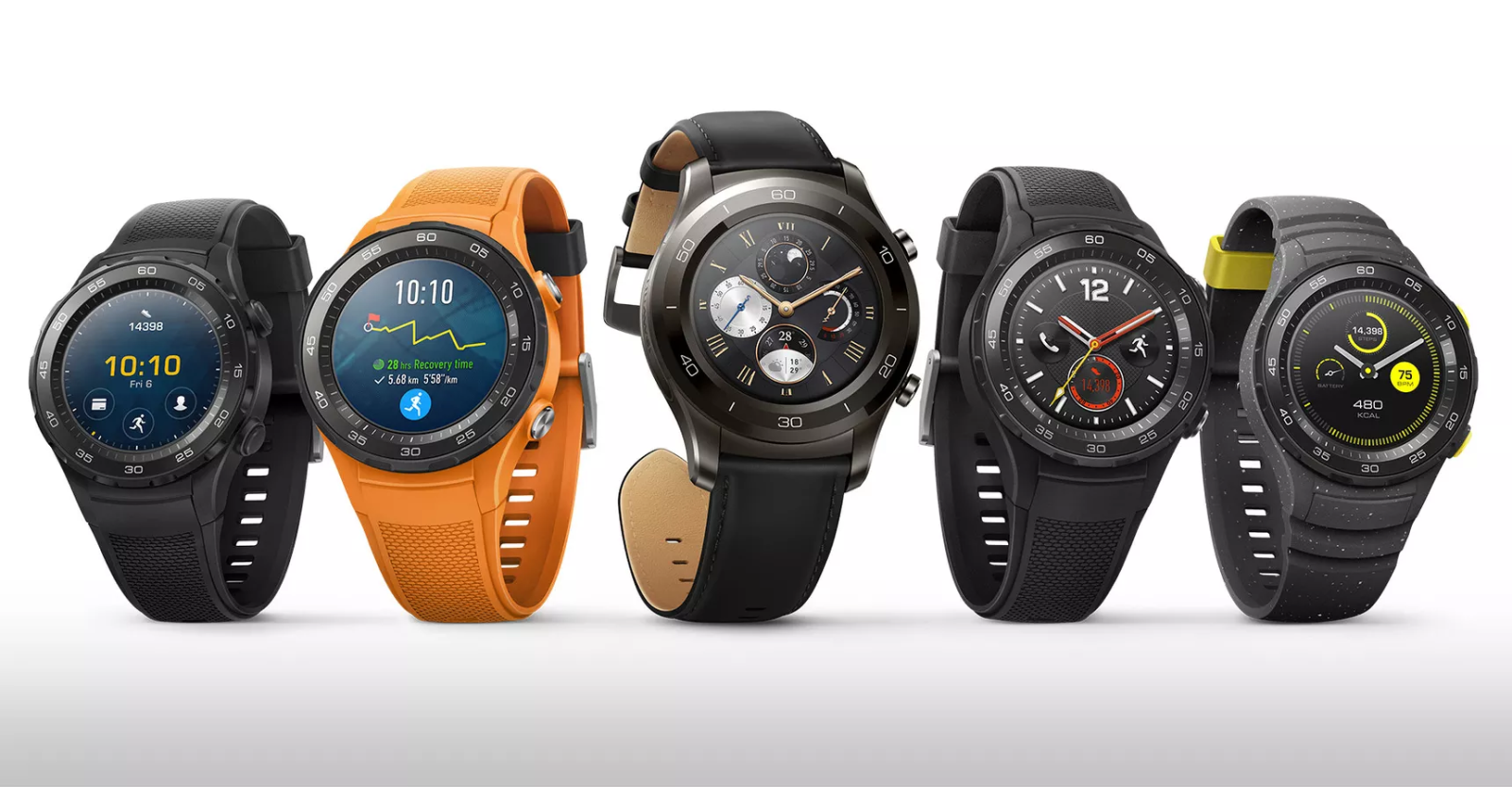
Both Huawei Watch 2 & Huawei Watch 2 Classic comes with Stainless steel build of 1.2-inch full circle AMOLED display, Snapdragon Wear 2100 processor , 768MB memory with storage of 4GB. it runs android wear 2,0 OS featuring 420mAh battery, IP68 rating for dust and water resistance with Gorilla Glass 3 protection. Both comes in colors Dynamic Orange, Carbon Black, Concrete Grey, Titanium Grey pricing for $350.
LG X Power2

LG X power2 smartphone comes with a 5.5-inch HD (720 p) In-cell display. it runs on 1.5GHz octa-core processor. The smartphone runs on 2GB or 1.5GB of RAM with 16GB internal storage, which can be expanded using a microSD card upto 2TB. the smartphone sports a 13-megapixel rear camera & a 5-megapixel selfie camera up front,both with LED flashes. Its biggest feature is the battery, which has a 4,500 mAh capacity with quick charge support. it runs on Android 7.0 Nougat OS & comes with a Black Titan, Shiny Titan, Shiny Gold and Shiny Blue colors option.
Sony Xperia XZ Premium, XZs, XA1, XA1 Ultra

the Sony Xperia XZ Premium, the smartphone sports a 5.5-inch Triluminos HDR display with 4K (2160 x 3840) resolution. It is powered by the latest Qualcomm Snapdragon 835 processor paired with Adreno 540 GPU and 4GB RAM. It offers 64GB of inbuilt storage with the option to expand further via a microSD slot (up to 256GB). There's a 19-megapixel rear camera with Sony's new Motion Eye camera system that provides 5x faster image scanning and data transfer. This means you can create videos by recording in 960 frames per second, providing Super slow motion video playback that is apparently four times slower than other smartphones in the market. There's also a 13-megapixel front camera with 1/3.06-inch Exmor RS sensor for selfies. The Sony XZ Premium packs a 3,230mAh battery, runs on Android 7.0 Nougat OS.
The Sony Xperia XZs is essentially a smaller variant of the previously launched XZ smartphone with a 5.2-inch (1080x1920 pixels) Triluminos display. It is powered by the Qualcomm Snapdragon 820 processor with Adreno 510 GPU and 4GB RAM. The smartphone offers 32GB and 64GB of internal storage options with the option to expand further via microSD slot (up to 256GB). The battery is at 2900mAh, the Xperia XZs measures 146x72x8.1 mm, and weighs 161 grams. The Sony Xperia XZs will be available in select markets from April onwards in Ice Blue, Warm Silver and Black colours.
The smaller Sony Xperia XA1 smartphone features a 5-inch HD (720x1280 pixels) display, packs a 3GB RAM, 32GB of internal storage, and offers a 2300mAh battery. The front camera is at 8-megapixel with no front flash or OIS. All the other specification details remain the same as the Xperia A1 Ultra smartphone. Both the smartphones will be made available in Spring in White, Black, Pink, and Gold colours.
The larger Sony Xperia XA1 Ultra, it features a 6-inch full-HD (1080x1920 pixels) display, and is powered by a 64-bit MediaTek Helio P20 octa-core (quad core 2.3GHz + quad core 1.6GHz) SoC with Mali T880 MP2 900MHz GPU and 4GB RAM. The smartphone offers 32GB and 64GB of internal storage, which is expandable further via a microSD card slot (up to 256GB). The big highlight of the Xperia XA1 Ultra is the cameras at the back and front. At the rear, there is a 23-megapixel Exmor RS image sensor with hybrid autofocus, 24mm wide-angle lens, f/2.0 aperture, 5x zoom, and HDR mode. There's a 16-megapixel Exmor RS sensor at the front with front flash, 23mm wide-angle lens, f/2.0 aperture, OIS, and autofocus. The battery is a 2700mAh, and the smartphone runs on Android 7.0 Nougat.
HP Pro x2 612 G2

HP Pro x2 612 G2 is a Rugged 2-in-1 Business Laptop Launched at MWC featuring multiple modes ideal for commercial use, including presentation mode, inking mode for taking notes, tablet mode for data collection, and notebook mode. The Pro x2 includes a USB Type-C connection for quick charging and data transfers. IT includes a built-in smart card reader, a removable SSD, and the HP Client Security Suite Gen3, along with an optional fingerprint sensor and NFC. it is priced starting $979 (roughly Rs. 65,000).