Showing posts sorted by date for query operating system. Sort by relevance Show all posts

Thursday, 16 February 2017

Apple to release iOS 11, WatchOS 4, tvOS 11 & MacOS 10.13 or 11 at WWDC June 2017


As WWDC is a huge platform for Apple, we expect to see some pretty big releases including iOS 11, WatchOS 4, tvOS, and MacOS 11 to be the stars of this year 2017 show.

iOS 11


Apple will almost certainly unveil iOS 11 in June 2017, followed by a public release in September 2017. The software will launch alongside at least two new iPhones on the 10th anniversary of the iPhone. We also expect the iPad 4, iPad mini 2 and iPhone 5 series will all have an iOS 11 compatibility, but we won't know for sure until Apple makes an announcement at WWDC.

Apple was granted a patent in November that mentions a dynamic keyboard positioning for touchscreens. The patent describes a concept in which typing "is improved by dynamically and automatically positioning the desired home-row keys of an onscreen keyboard below the user's fingers while their fingers are hovering above the surface, thus reducing the need for the user to look at the onscreen keyboard while typing". 


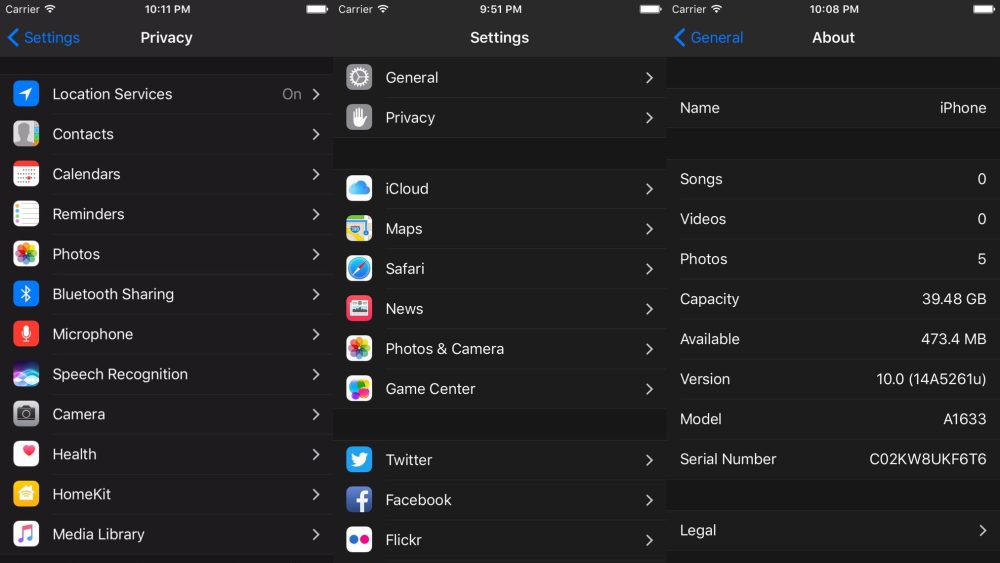
Some highly expected updates of ios 11 would be dark night mode, redesigned home screen & control center, App customization, 4 way facetime group chat & video calls, true bluetooth & screen recording & many more.


According to Business Insider, Apple wants to make Siri sound more natural. So, we might see Apple update Siri with new capabilities.

MacOS 10.13 or 11

Apple is fairly predictable when it comes to macOS updates.  Apple will probably unveil the next version of MacOS at WWDC 2017. At this point, Apple hasn't announced an official name for this year's update. But reports claimed that Apple will release the next version as MacOS 11.

Fans are widely expecting a Health app, Home app, and dedicated Music app for MacOS. Other wish-list features have included a system-wide Dark Mode and nearby iPhone auto-unlock feature.

WatchOS 4


Apple is set released the latest version of the WatchOS operating system, WatchOS 4 to the public this year like it did last year at WWDC 2016. It's a significant update that brings new apps, new watch faces, a new dock, new activity sharing, a new Breathe app, and a slew of navigation and performance improvement features like Sleep Tracking, and more every yr.

TvOS 11

There's not much news floating around about TVOS 11, but we expect Apple to at least touch on it. Consumers' wish-list features include a 4K support, Dolby Atmos support, Safari & Home app for Apple TV, "Hey Siri" voice activation, and Siri search for local files on a Mac.

iMessage


One of the last iOS-related rumours that has been circulating claims that Apple is finally planning to bring its iMessage service to Android. We may see even more features added at WWDC 2017.


Friday, 14 October 2016

Samsung Galaxy S8 & S8 Edge - Leaks, Rumoured Features & Specifications, Price, Release Date (US & India) [Everything you need to Know]

Samsung Galaxy S8, S8 Edge [Specifications]

Release date
26 February 2017 (April in India)
Price
$800 to $900 (54,000 - 60,000/-)
Display
Gorilla Glass 5
Battery capacity (mAh)
3900 mAh - 4200 mAh
Removable battery
Yes
MicroSD
Yes (Upto 256)

DISPLAY
Screen size (inches)
5.2'' - 5.5"
Touchscreen
Yes
Resolution
3840 x 2160 pixels
Pixels per inch (PPI)
806

HARDWARE
Processor
3 GHz  octa-core
Processor make
Samsung Exynos 8895 , Snapdragon 830
RAM
4GB - 8GB
Internal storage
32GB/ 64GB /128 GB

CAMERA
Rear camera
20 MP - 30 MP
Flash
Yes
Front camera
8 MP

SOFTWARE
Operating System
Android  7.0 (Nougat)
Skin
TouchWiz

CONNECTIVITY FEATURES
Wi-Fi
Yes
Wi-Fi standards supported
802.11 a/ b/ g/ n/ ac
GPS
Yes
Bluetooth
Yes, v 4.10
NFC
Yes
Infrared
Yes
USB Type C
Yes
Headphones
3.5mm
FM
No
SIM Type
Nano-SIM (Dual)
GSM/ CDMA
GSM
3G
Yes
4G/ LTE
Yes
Supports 4G in India (Band 40)
Yes

SENSORS
Compass/ Magnetometer
Yes
Proximity sensor
Yes
Accelerometer
Yes
Ambient light sensor
Yes
Gyroscope
Yes
Barometer
Yes
Temperature sensor
No

Features of Samsung Galaxy S8, S8 Edge

  • Wireless & Fast Charging
  • 4K UHD (VR Support)
  • Iris Scanner
  • Dust & Water Resistant (IP69)
  • 5G Network Connection
  • Mini Projector
  • USB Type C (Fast Transfer)
  • Fingerprint Scanner
  • Dual Lens Camera with OIS
  • Android Pay / Samsung Pay
  • Vulkan API (HDR Gaming)


Monday, 7 January 2013

Important Abbrevations

Technologies

4G - 4G refers to the fourth generation of wireless communications.is basically the extension in the 3G technology with more bandwidth and services offers in the 3G.

3G - Third Generation mobile technology will allow users to get a better host of services and connectivity speeds from their service provider. That means download speeds on mobile devices will be faster as well as data and media streaming.

3GPP - 3rd Generation Partnership Project can be construed to be a combination of all GSM, GPRS/EDGE and W-CDMA specifications.

A-GPS Assisted Global Positioning System allows for a quicker mode of gathering required satellite information via the internet via servers. GPS enabled handsets can get information without the use of A-GPS however it would take a little longer. In order to use A-GPS you would of course require a working internet service on your mobile handset via your service provider.


Android

It is developed by Google and part of the Open Handset Alliance now, Android is not just an operating system but a software platform as well. It's based on the Linux Kernel, which is quite synonymous with free or open source software. Developers will also be able to write codes for developing new applications for the OS with Java. The first Android powered handset was HTC's G1.

Android has become extremely popular today, with devices powered by the OS providing stiff competition to Apple's devices. Here's a list of the codenames used for Android OS versions :-

Donut - Version 1.6
Eclair - Version 2.0/2.1
FroYo - Shortened form of Frozen Yoghurt, Version 2.2
Gingerbread - Version 2.3
Ice Cream Sandwich - Supposedly Version 2.4
Honeycomb - Version 3.0, optimized for tablets.


ROMs

A stock ROM is the official, signed software version from a phone manufacturer that will either come on the device when you buy it or will come in the form of an update.

"Rooting" your device means obtaining "superuser" rights and permissions to your Android's software. With these elevated user privileges, you gain the ability to load custom software (ROM's), install custom themes, increase performance, increase battery life, and the ability to install software that would otherwise cost extra money (ex: WiFi tethering). Rooting is essentially "hacking" your Android device. In the iPhone world, this would be the equivalent to "Jailbreaking" your phone.

BREW - is Qualcomm's open source application development platform for wireless devices equipped for CDMA technology.

Bluetooth – A wireless method of communion between devices for either data transfer or remote access and control.

Bluetooth 2.0 + EDR – Bluetooth (BT) with Enhanced Data Rate offers faster rates of communication between Bluetooth enabled devices.

A2DP - Advanced Audio Distribution Profile allows Bluetooth enabled media devices to communicate with receivers in Stereo Bluetooth headsets for better audio experiences.

AVRCP - Audio/Video Remote Control Profile allows BT enabled devices to communicate and control and interface with other BT enabled devices not just for data transfer but in a more in-depth sense. For example one can control your PC's media player via Bluetooth from a mobile handset equipped with Bluetooth that also has an AVRCP profile.

BTS - Base Transceiver Station; the network entity which communicates with the mobile station.

CDMA - Code division multiple access is another form of mobile/cellular technology that allows users to use the entire spectrum of frequencies available that are capable of providing better sound and data communication. Some CDMA handsets have built in SIM cards, so specific handset models have been designed for this technology. The range of mobile handsets available with CDMA, are a little more limited as compared to GSM. CDMA is a military technology first used during World War II by English allies to foil German attempts at jamming transmissions.  

CMOS SensorComplementary Metal Oxide Semiconductor are most widely used in mobile handset cameras. The reason for this is because these sensors require fewer components (perfect for space constraints) and lesser power so it also reduces the cost.

Core - A core, in its basic terminology, is a distinct CPU. Any singular core is capable of executing all of the necessary computations and instructions to ensure a smartphone can function at all. Learn more about Single Core / Multi - Core chips and find out whether you need them here.


Displays

TFT LCD - Thin Film Transistor Liquid Crystal Display. TFT LCD type screens are also used in TV's and computer monitors.

QVGA Quarter Video Graphics Array is 240 x 320 pixels, this is pretty standard for most mobile handsets.

VGA - Video Graphics Array is 640 x 480 pixels for handsets with larger displays.

WVGA - Wide Video Graphics Array 800 x 480.

OLED - Organic Light-Emitting Diode. Nokia's N85 uses this type of display.

AMOLED - Active Matrix OLED. An enhanced version of OLED screens, AMOLED screens used very commonly now, in phones like Nokia's N8. Active-matrix OLED displays provide higher refresh rates than their passive-matrix OLED counterparts, and they consume significantly less power.

Super AMOLED - Super AMOLED refers to touchscreens where the layer that detects touches is integrated onto the screen rather than being a layer on top of it. This leads to increased brightness and clarity. The Samsung Galaxy S bears this type of screen.

Super AMOLED Plus - First introduced with the Samsung Galaxy S II series smartphones, is a further development where the PenTile RGBG pixel matrix is replaced with a common RGB subpixels arrangement, going from eight to twelve subpixels in a group, resulting in finer details. The screen technology is also brighter, thinner and 18% more energy efficient.

Retina Display - First used in Apple's iPhone 4, the Retina Display is an IPS LCD screen that packs has a very high pixel density (number of pixels per inch), making it very hard for the naked eye to distinguish between pixels and therefore leading to seemingly higher quality.


 Mostly used touchscreen types: Capacitive  Resistive 

capacitive touch screen technology
resistive touch screen
Touch Monitor

resistive touch screen


Advantages & disadvantages of display screens :

TFT LCD — thin film transistor displays are easily the most common in smartphones at this time, though manufacturers are paving the way for newer, better performing screen technologies. TFT LCDs are often used in laptop displays as well.
Advantage – Cheap to make, most commonly used screen.
Disadvantage –  Aging Technology, Not as bright or clear as other display technologies.

AMOLED — active matrix organic light emitting diode is one of the prominent up and coming display technologies looking to take over from TFT displays.
AMOLED screens are visibly more colourful than TFT displays and have a lower power consumption with thanks to the intriguing fact that the colour black is produced by the OLED being switched off. AMOLED screens have been used by Samsung, HTC, Nokia and Dell to name a few, and continue to be in high demand. They give off clear, bright and sharp images as seen in the images below. The potential problem with AMOLED screens is that they are quite poor in direct sunlight, and the screen will be close to unusable.
Advantage – Bright and clear quality, Low power consumption for screens.
Disadvantage –  Almost un-viewable in direct sunlight, Display can appear pixelated.

Super AMOLED — Samsung has positioned itself at the forefront of mobile display technologies producing its “Super” variant on the AMOLED display. By combining the touch panel and the top layer of glass, Samsung has created a screen that is visibly more vibrant than previous AMOLED screens, and more usable in direct sunlight.
Advantage – Everything AMOLED is but better, great for watching videos on.
Disadvantage –  Still poor in direct sunlight, but better than regular AMOLED.

Super AMOLED Plus – Another Samsung fortified screen technology, which is available on the latest Samsung Phone Models. It is an advanced version of the Super AMOLED technology with better colour reproduction and scaling. Not as bright as Super AMOLED, but better. More subpixels are crammed into the screen tech, allowing it to be more pleasant for your eyes.
Advantage – Amazing color reproduction, better viewing angles.
Disadvantage –  Not good enough in the sun yet, colours can seem washed out on larger screens.

AMOLED CBD — A Nokia only technology in which their latest phones use an AMOLED Clear Black Display (CBD) screen which results in deep blacks. A CBD displays blocks incoming light reflections and so perform better under direct sunlight. Generally considered on par and sometimes better with Super AMOLED Plus with superior contrast and colours.
Advantage – The best screen under direct sunlight, deep blacks.
Disadvantage –  Does not take full advantage of AMOLED features.

Super LCD (SLCD) — Another contender for screen dominance is Super LCD. A variant of traditional LCD technologies, SLCD offers better contrast and warmer colours than older LCD displays, but is said to drain more power than AMOLED displays.
Advantage – Cheaper to produce than AMOLED displays, Works better in direct sunlight over AMOLED.
Disadvantage –  Drains more power than AMOLED displays, not as bright as AMOLED either.

IPSin-plane switching smartphone screens are characterized by vibrant colours and excellent off-axis viewing angles. IPS screens are typically more expensive, but the result is a screen you can see clearly from any angle. Apple recently employed IPS technology in the LCD display of the iPad and iPhone 4 (which they are also referred to as Retina Screens in the iPhone 4 only). IPS has a resolution 960 x 640. This basically means that an IPS Display uses a SLCD screen, but packs more pixels which improve quality
Advantage – Able to create a more viewing angles than other displays, able to zoom in with more clarity
Disadvantage –  Expensive to create, very few companies use this technology so far

Qhd Quarter HD Screen is exactly how it sounds, as it has quarter of Full HD. Full HD resolution is considered 1920 x 1080, so quarter HD is 960 x 540. It is not quite as good as IPS technology, but it’s has a great looking screen resolution on any device! Qhd is not a screen type, but the amount of pixels in that screen, exactly like Retina Screen’s.


EDGE - Enhanced Data rates for GSM Evolution can also be called EGPRS or Enhanced GPRS and means exactly what it states. It's one step above GPRS and provides for a little faster browsing and data transfer speeds.

ESN - An ESN is a numeric identifier that uniquely identifies a CDMA phone. The ESN is what a CDMA network uses to identify a phone and determine which subscriber's account, if any, it is linked to. Because of this, when switching from one phone to another, subscribers will have to provide the ESN of the new phone to the network carrier before it can be activated. The ESN is being phased out in favour of the MEID. This is happening because phone manufacturers are literally running out of ESN identifiers.

FDMA - Frequency Division Multiple Access- A transmission technique where the assigned frequency band for a network is divided into sub-bands which are allocated to a subscriber for the duration of their calls.

GSM - Global System for Mobile communications (originally from Groupe Spécial Mobile). To cut a long story very short is the technology that allows for mobile handsets to connect to service providers using any model phone or any service provider anywhere in the world. GSM handsets can be used with SIM cards.

GPRS - General Packet Radio Service is universal as a mobile data service (packet) for 2G and 3G networks. It provides data rates from 56 up to 114 kbit/s of information when connected to the net via the mobile handset's browser.

HDMI - High Definition Multimedia Interface : A standard for audio/video cables and connectors. HDMI supports and carries high-definition (HD) video and multi-channel audio over a single cable. It carries an all digital signal, ensuring high quality. Some phones have a Mini-HDMI (Type C) or Micro-HDMI (Type D) connector to allow the phone to be connected directly to a television, so that video content on the phone can be played back on a full-size television screen. This requires a HDMI cable with a Mini or Micro - HDMI connector on one end and a full size (Type A) HDMI connector on the other end.

Hot Swap Slot – A memory card slot that's accessible without having to remove the battery or the rear panel. Some handsets do have a memory card slot just under the rear panel that but you won't need to touch the battery. This could also be termed as a Hot Swap Slot.

HSCSD - High-Speed Circuit-Switched Data implies four times faster data transmission for mobile for users using GSM with rates up to 38.4 kbit/s. It's basically high speed implementation of standard GSM transfers.

HSDPA - High-Speed Downlink Packet Access is often associated with 3G. It allows networks to provide higher data transfer speeds and capacity. Current HSDPA deployments support down-link speeds of 1.8, 3.6, 7.2 and 14.4 Mbit/s.

iDEN - it is a mobile telecommunications technology, developed by Motorola, which provides its users the benefits of a trunked radio and a cellular telephone. iDEN places more users in a given spectral space, compared to analog cellular and two-way radio systems, by using speech compression and time division multiple access (TDMA).

IR Infra Red is slowly being phased out these days with BT taking a bigger and more active role in a mobile handset's wireless mode of data transfer and communication. IR means having to keep two handsets aligned with their IR receivers facing each other or 'in line of sight' whereas Bluetooth doesn't not have such limitations and is faster as well.

Jailbreak – Jailbreaking means hacking into the core system of the iPhone so as to allow users to gain access to areas that were otherwise closed off (Unix File system).


Keypads

QWERTY – A full QWERTY keypad is a mobile keypad that would allow you to visualize and use this type of mobile input system as well as you would a desktop PC's keyboard. Each company tries to design their handsets keypad to mimic a PC's as best as they can.

SureType - or Half QWERTY keypad are essential the same. SureType is more specific to BlackBerrys.

Virtual Keypad - is an On-Screen keypad which is specific to handsets with touchscreens. These are also available in QWERTY, SureType or Half QWERTY as well as normal alphanumeric options.

Swype - Swype is a virtual keyboard which allows users to enter words by sliding a finger or stylus from letter to letter, lifting only between words. It uses error-correcting algorithms and a language model to guess the intended word. It also includes a tapping predictive text system in the same interface.

LTE - Long Term Evolution is the name given to a project associated with 3GPP to help improve and perhaps even standardize future mobile technology. A lot of devices that supported LTE connectivity were launched at CES 2011, but were marketed as 4G-enabled.

Mail for Exchange – A more up scaled version of Push Mail would be Mail for Exchange. With an application being installed on the handset itself, this service would also download your emails in a real-time environment and also sync and integrate with your Contacts list and Calendar. Much like having MS Outlook on your mobile.

MEID - An ID number that is unique for each new CDMA mobile in the world. It identifies the phone to the network. MEID is a replacement for ESN. It began replacing ESN in 2005 since the pool of ESN numbers has been virtually exhausted due to the number of devices in use. It is equivalent to IMEI in GSM phones.


Memory Cards

Secure Digital Card (SD card) - SD cards are used in many small portable devices such as digital video camcorders, digital cameras, handheld computers, audio players and mobile phones. In use since 1999, SD Memory Cards are now available in capacities between 16 Megabytes and 1 Gigabyte, and still growing. An SD card typically measures 32 mm x 24 mm x 2.1 mm and weighs approximately 2grams.

MiniSD Card - After the success of the SD Card (Secure Digital Card), the miniSD Memory Card was developed to meet the demands of the mobile phone market. The MiniSD Card provides the same benefits as the SD Card, but is smaller than the original SD Card. MiniSD Cards are typically found in many newer mobile phones with features such as built-in digital cameras, downloading and games, basically the mobile phones where the miniSD can meet the requirements for increased data storage. MiniSD cards are 21.5 mm x 20 mm x 1.4 mm and generally provide 16MB to 256MB of storage.

MicroSD - Mainly used in mobile phones and other small handheld devices the MicroSD format is currently available in capacities up to 4GB, and it roughly 1/4th the size of the SD card at 15mm W 11mm W 0.7mm. The MicroSD card is also the smallest memory card available.

Card adapters - they can be purchased for enabling backwards compatibility — this would allow MicroSD cards to work in SD and MiniSD slots, and also for MicroSD cards to work in SD card slots.

MultiMediaCard (MMC) - The MultiMediaCard (MMC) standard was introduced by SanDisk and Siemens in 1997. The card itself is 32 mm x 24 mm x 1.4mm and is often used in place of the SD card. Transfer speeds of a MMC is around 2.5MB/s and they can often be used in SD Card readers.

Sony Memory Sticks - Sony Memory Sticks are light, compact and designed for a wide variety of devices including digital cameras, recorders, and more. With the use of an adapter most Sony Memory Sticks can be used with almost all Memory Stick PRO compatible products.

Memory Stick Micro (M2): 15 mm x 12.5 mm x 1.2 mm.

Memory Stick PRO: 50 mm x 21.5 mm x 2.8 mm. The Memory Stick PRO format has an an 8-bit parallel interface with theoretical transfer rates up to 480Mb/s. It is commonly used in high megapixel digital cameras and digital camcorders.

Memory Stick PRO DUO: 31 mm x 20 mm x 1.6 mm. The Memory Stick PRO Duo media is about one-third the volume and half the weight of standard-size media, but offers all the advanced functions of Memory Stick PRO media.

Multi-Touch – This term is applied to specific usability on touchscreen mobiles that allow for specific actions. For example – the pinch to zoom feature in the Apple iPhone. It's a more sophisticated touchscreen feature that has hardware and software working simultaneously to recognize more than just one point of contact with the screen and responding to the same. Most touchscreen handsets' UI will not permit the use to multiple contacts with the screen to activate features and function.

Nav-Pad or D-Pad – This refers to the five way navigation pad that's usually located under the display and can be used to maneuver through menus and settings. The center key is for selecting options. Nokia also uses what they call a Navi-Wheel that's similar to the iPod's Click Wheel. It's soft touch scrolling in a circular motion for moving around a menu system.

NFC - Near Field Communication allows for the wireless communication to take place between mobile devices with a very fixed radius of about four inches. This system is not unlike BT or IR but it does have the limitation of distance.


Podcasts – Podcasts are either video or audio snippets on various topics uploaded to the net via individuals, corporations, radio stations etc. that can be downloaded for playback on a mobile handset via an active internet connection. They're usually in the form of web feeds.

PRL - it is a database residing in a wireless (primarily CDMA) device, such as a cellphone, that contains information used during the system selection and acquisition process. In the case of RUIM-based CDMA devices, the PRL resides on the RUIM. The PRL indicates which bands, sub bands and service provider identifiers will be scanned and in what priority order. Without a PRL, the device may not be able to roam, i.e. obtain service outside of the home area.

Proprietary Ports – As the name implies, it's the connectivity port for a handsfree, charger or USB that is design-specific to a single company's brand of handsets. It's also one of the more irritating aspects in the mobile phone industry. With a standard port, users can simply use wires from other products and vice-versa instead of hunting for a very specific wire that in most cases is only available with the handset manufacturer who would probably charge a premium rate.

Push Mail – This service allows a handset with an active internet connection and support for the same to always download new messages from a designated server linked to your personal email address. What this means is, a real-time download of all incoming emails to your mailbox which you can access from your mobile as well as your PC.

Pwnage – To be Pwned is the same as street slang for 'Owned' i.e. to be taken for a ride (in some cases) or to be to be controlled against your will. In the world of the iPhone to have your iPhone Pwned, would mean to jailbreak it and gain access to all areas. A Pwnage tool is required to do just this.

RDSRadio Data System is a very frequent term attached to the FM radio capabilities in a mobile handset. It's a method of transmitting small but useful snippets of digital information via the radio's frequencies that would include Track name, name of the artist etc.

SAR (Specific Absorption Rate) - A cell phone's SAR, or its Specific Absorption Rate, is a measure of the amount of radio frequency (RF) energy absorbed by the body when using the handset. All cell phones emit RF energy and the SAR varies by handset model


Series 40 and Series 60 – S40 or S60 are mobile User Interfaces (UI) that work with the Symbian Operating System. S40 UIs are usually found in some of the lower end Nokia handsets and S60 can be found in some of the more advanced. Nokia has launched a touchscreen version of their Series 40 UI and of course, you'll all be familiar by now with the 5800 XpressMusic that uses a S60 touch based UI. Nokia's N8 had a new version of their Symbian UI, named Symbian ^3.

Tap-Screen/SurePress - The latest in touchscreen technology is RIM's offering in their BlackBerry Storm 9500. While the UI works quite like any other touchscreen interface with response to touch by sliding your fingers across the screen; in order to actually activate major functions or selections, the screen itself can be pressed, not unlike a normal button on a keypad. This technology is what we call Tap-Screen and what RIM calls SurePress.

UIQ - User Interface Quartz , is essentially a platform based on the Symbian Operating System (OS). A variant of sorts. Later versions are used in handsets that have touchscreen interfaces. The UIQ platform also allows for plenty of development and also supports Java.

UMTS - Universal Mobile Telecommunications System is one of the 3G mobile cellular technologies. Also understood as 3GSM in many cases, it essentially implies a sort of hybrid combination of 3G with its speed and GSM with a more globalised standard.

Unlock – Unlocking carrier locked phone implies you would be able to use it as an open GSM handset so that it would no longer be tied to a single carrier. You'd be free to use any service provider's SIM card and services attached to the same without disrupting the use of the handset in any way.

USB Universal Serial Bus is simply a wired standard used for interfacing between a mobile handset and a PC for various purposes be it media and data transfer, backing up of information or even recharging the battery. Mobile phones usually have this in mini-USB and micro-USB variants.

VOIP - Voice over Internet Protocol, in the simplest sense, implies the ability to make voice calls over the internet. In a mobile phone it would mean the ability to make a call using Wi-Fi, EDGE or any other internet service the handset permits.

WAP - Wireless Application Protocol is simply the system used by a mobile handset to connect to the internet but it's a little more 'strictly' basic when compared to GPRS or EDGE.

W-CDMA - Wideband Code Division Multiple Access is another type of 3G network.
Wi-Fi - is a mode of wireless connectivity but with a stricter sense. It allows for mobile handsets to connect to Wi-Fi routers in a certain area for quick and high speed internet connectivity.

WiMAX - Worldwide Interoperability for Microwave Access is a wireless digital communications system intended for much larger areas as compared to Wi-Fi. It can provide broadband wireless up to 50 km for fixed stations, and 5 - 15 km for mobile stations. Wi-Fi on a much larger scale like EDGE/GPRS with broadband speeds.

Commonly Used Abbreviations with CDMA :

MIN - Mobile Identification Number
ESN - Electronic Serial Number
PRL - Preferred Roaming List
SID - System Identification Number
SCM - Station Class Mark
CAI - Common Air Interface
A Key - Authentication Key
NAM - Numeric Assignment Module
SPC - Service Programming Code